
Language is coded, obviously. We do not always come out and directly say what we mean.
You might know this if you watched Saturday Night Live's version of Katy Perry’s “Say What You Want to Say” skit.
So, when someone says, “You should totally come if you want, but only if you want to,” it usually means they don’t want you to come that badly.
When someone says “Do you want a bite of this?” nine times out of ten they’re just being polite, and really hope you say no.
What else do New Yorkers say when we actually mean other stuff? Read on to find out.
1. What we say: "K."
What we mean: "I am super unhappy with you right now, but I’m also either afraid of confrontation or vaguely aware that confrontation via text is a bad idea."
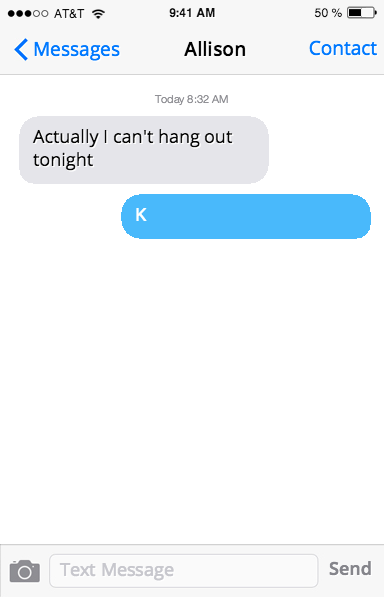
The single "K" is a bad sign. A very, very bad sign. If someone wanted to express the affirmation “Okay,” they would have typed the whole word, and included a peppy exclamation point.
If someone only types two letters “Ok,” they might be mad. If they type “Kk,” they’re super not mad.
The worst part about receiving a text message with a single "K" is that you can’t call the person out on it. They’re avoiding culpability by using veiled language.
If you were to respond to the “K” text message by saying “What’s wrong?” That person could easily respond by saying, “Nothing’s wrong! I said okay!”
But, don’t listen to them. Something is clearly wrong.
2. What we say: "Let’s catch up soon!"
What we mean: "I don’t want to see you. Or, I’m too lazy to make plans."
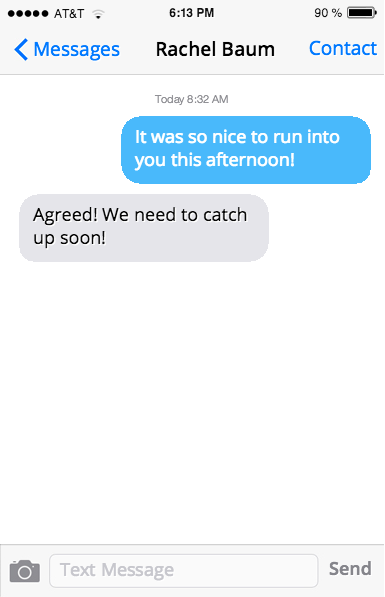
... if we say, let’s get drinks on Wednesday, that means we want to see you. If we say, “Let’s catch up soon!” it means we don't want to see you, but we don’t want to be rude.
Or, it might mean we're super stressed about all the other plans we might have made but don't remember.
New Yorkers don't keep calendars, so we can't know for sure. We're going to have to re-read our text messages to find out when we're actually available to hang out.
3. What we say: "On my way!"
What we mean: "OMG! I just woke up from a nap way later than I expected to, and I’m still in bed. I'm not even dressed. I’m going to be at least forty minutes late."
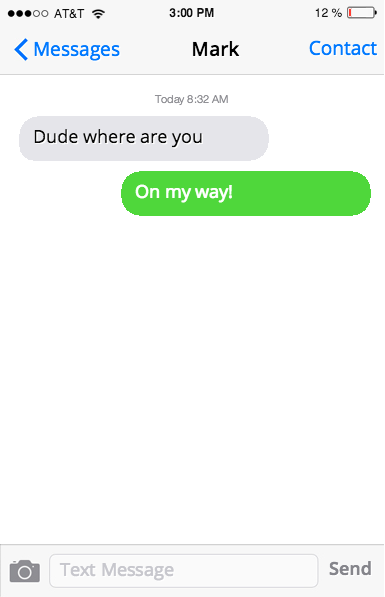
The best part about being a New Yorker is you’re one thousand percent expected to be at least 15 minutes late. Being the newbie that shows up early is not a good look.
Being forty minutes late, though, is stressful.
The subway will inevitably stop “due to a request from the train’s dispatcher.” And the person you’re meeting will probably be unhappy with you, because you’re making it very clear you think your time is more valuable than theirs.
4. What we say: "What’s up?" or "Heyyyyy"
What we mean: "We want to get it on, but we don’t want to leave our beds to do it."
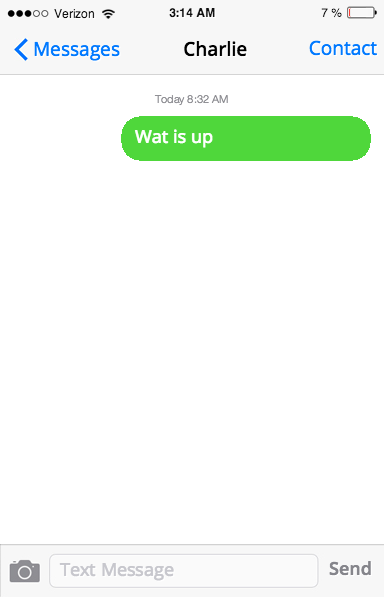
Any variation of “What’s up?”, "Heyyyy", “What are you doing?”, or “Want to come over and smoke?” all mean the same thing.
The person sending these text messages is likely lying in bed and experiencing a lethal combination of loneliness, horniness, and laziness.
If you’ve ever been the person to send this text, you know all too well that you definitely didn’t just send this text to one person.
You probably sent this text to upwards of six people, and your grand plan is to just lie back and see who wants you badly enough that they’re willing to ride the subway.
5. What we say: "That might work!"
What we mean: "I think that’s a terrible idea, but I don’t want to hurt your feelings."
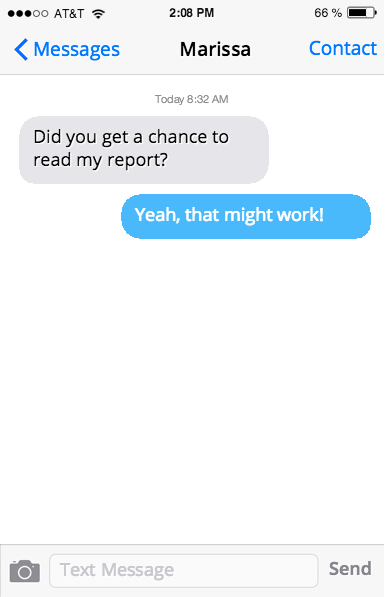
Since New Yorkers tend to have short attention spans, we also tend to be impulsive. Which means if we like an idea, we are going to try and implement that idea the moment we hear of it.
If we say that might work, it means we never plan on thinking about your idea again.
6. What we say: "I was hoping to schedule an appointment?"
What we mean: "I am, present tense, hoping to schedule an appointment, and it’s not a question."
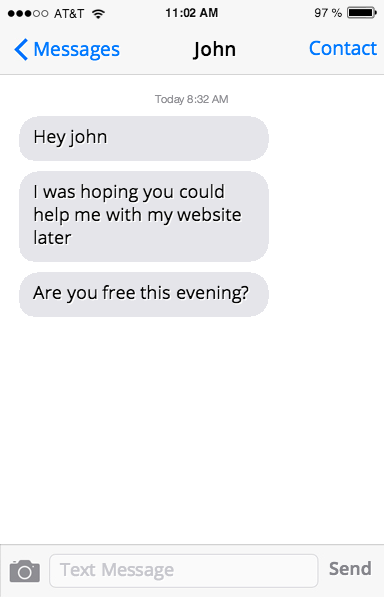
Again, asking to schedule an appointment in the present tense is too urgent for us, so we’ll say that we were, in the past, hoping to schedule an appointment, and we’ll inflect our voices like it’s a question.
This is another instance of using veiled language so we don’t sound too direct. We’re trying to be polite by phrasing our desire to make an appointment in the past tense.
How it comes out sounding, though, is: "Yeah, like, earlier today I wanted an appointment, and I’m calling you now to tell you about how I wanted an appointment earlier."
So, if you don’t have one it’s cool, because it’s not like I want it now or anything.
Check out Enough Already! 5 Ways Your Smartphone Is Absolutely Destroying Your Social Life.